
E-bikes Are Growing in Popularity, Safe Streets Need to Keep Up
This is a 2-part post. Post 1 explains our stance around the growing popularity of e-bikes. Click here to see post 2 outlining our policy recommendations for safe and accessible e-bike usage.
Earlier this month, New Jersey passed a law requiring license and registration for all e-bikes. Not only does this set New Jersey up to be the most unfriendly bike state, it opens the door to more traffic violence and emissions for all residents. California can’t go down that road.
E-bike sales have been surging in the U.S. More than half of daily trips nationally are less than three miles, making a bike or e-bike a practical alternative to driving. Shifting even a portion of these short trips to bicycle, would deliver enormous reductions in emissions and collisions.
However, the headlines around e-bikes lately have been rather alarming, suggesting that e-bikes are a dangerous form of transportation. While each injury or crash is a unique tragedy, the solution is not less e-biking or restricting access. The solution is safer roads and better education.
If more people traded a car trip for an e-bike trip, we would reduce the likelihood of collisions. Cars are still the deadliest form of travel. Crashes involving e-bikes are a tiny sliver of the problem.
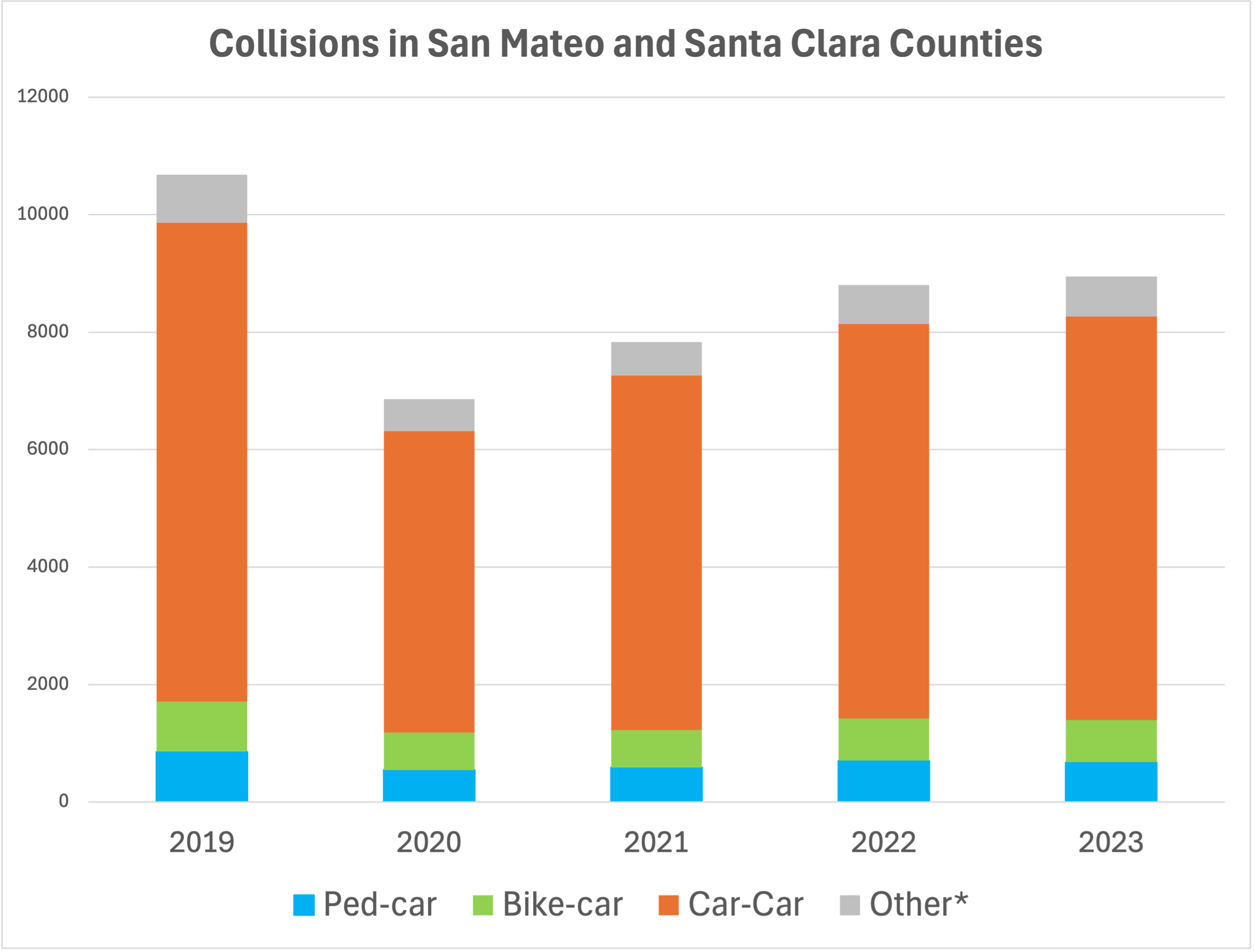
Source: TIMS 2019 -2023. Other* includes crashes involving cars and trucks or cars and motorcycles.
E-bikes are not more dangerous than traditional bikes—and certainly not cars
Recent research from the Mineta Transportation Institute analyzed the available data to understand if e-bikes are more dangerous than other modes. The first finding was: there just isn’t good data tracking e-bike class or whether it was a legal e-bike. They were able to analyze national emergency room data from 2020-2024 to understand if “e-bikes” (defined by this dataset as “electric power-assisted pedal bicycles - excluding off-road vehicles and minibikes”) were more likely to cause injuries amongst all transportation modes or to a specific demographic group. The total number of injuries on a conventional bicycle was far higher than those on an e-bike—and those in a car were far, far higher than that. Looking at the e-bike injuries specifically, about 20% of patients were minors which is reflective of their U.S. population.
We are seeing conversations in the news and at city council meetings without full context of the risks and benefits of cycling and who has access to it. The issues are largely focused on improper behavior by youth, such as modifying bikes, riding without helmets, carrying a passenger, or texting while riding. As a result, counties and even school districts are restricting e-bikes. It’s understandable, but this should be solved at the national and state levels. It’s unfair for riders to have rules that change across jurisdictions.
It’s important to keep the positives in play, as well. E-bikes have expanded access to biking, and make it easier for more people to lead active lifestyles, improving both public health and mental well-being. E-bikes provide freedom via affordable, climate-friendly transportation, and everyone deserves access to the tools to ride safely. They are not primarily toys or leisure devices, but a transportation mode (that happens to be fun).
Safety on e-bikes starts with proper bike education
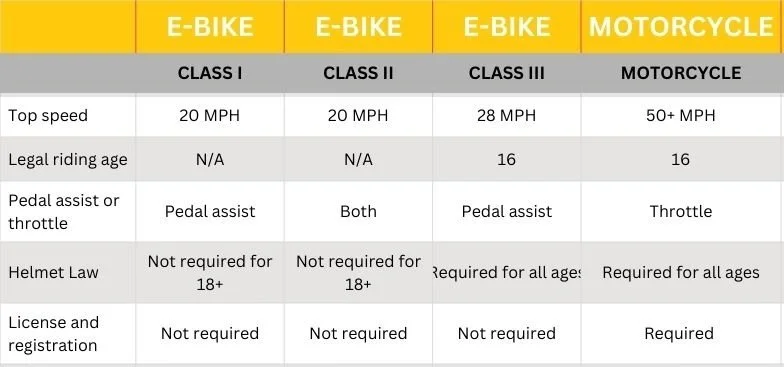
SVBC offers e-bike education, and our classes always start with the types of e-bikes and e-devices available. California law defines an e-bike as “a bicycle equipped with fully operable pedals and an electric motor of less than 750 watts.” (VEH 312.5). The watts capability is important, because it determines how fast a bike can go, and how much the rider needs to pedal to achieve that speed. The watts on a bike translates to “throttle” capabilities. Throttle is a button or lever on the handlebar that allows the rider to activate the motor without pedaling. Many e-devices can reach 21+ miles per hour without any pedaling. These e-devices are not e-bikes.
Learn more about SVBC classes and offerings here.
The dangers of modifications and misinformation
Even if sold as a legal e-bike, many are modifiable and can be altered to go much faster than their general classification allows – colloquially called “jail breaking,” or “mudding.” This is very common amongst youth, and parents need to be aware. What’s more, many devices are sold with a marketed benefit that they are modifiable; for example, downloading a simple app or making a small change will increase the power. Or, there are plenty of YouTube tutorials to figure it out yourself.
Beware of “e-motos”
Any e-device with more than 750 watts is not a legal e-bike. But it’s impossible to tell just by looking at it. You would have to open up the motor or research the brand and model. Using this latter methodology, groups across the region from San Mateo to Marin Counties have audited the bike racks at various schools to find an alarming number of so-called “e-motos” in the parking lot, and these devices are often mislabeled. We see “Class II” stickers on bikes that are way more powerful than regulation Class II.
Speed is an important threshold when considering what device is safe for each rider. Higher speeds whether you are driving or biking increase risk of injury in a crash.
We are not the first country to grapple with this problem. In other countries like the E.U. and China there are lower speed limits for e-bikes, with maximum 250 watts, so they can’t go more than 15 MPH. The distinction between e-bikes and e-motos (which are very popular) is clearly understood in these places. Here, the line has been blurred with e-bikes and “e-motos” often understood as the same thing when they are dangerously different devices.
In our next post, we will outline our recommendations for keeping riders of all ages safe on e-bikes. In the meantime, don’t miss these local events discussing e-bikes in your community.
Local, upcoming events discussing e-bikes in San Mateo County
Wednesday 1/28 at 5 PM: Sen. Becker is hosting an e-bike forum. RSVP here.
Saturday 1/31 at 10 AM: Asm. Papan is hosting an e-bike town hall. RSVP here.
This is a 2-part post. Post 1 explains our stance around the growing popularity of e-bikes. Click here to see post 2 outlining our policy recommendations for safe and accessible e-bike usage.
